

Rates and Insurance
Movement for the Mind is a private-pay therapy practice, but with a different approach to private pay.
Rather than setting one fee and expecting it to fit everyone, we use an equitable private-pay model that recognizes differences in income, resources, access, and financial capacity.

You have more options than what insurance companies want you to think.
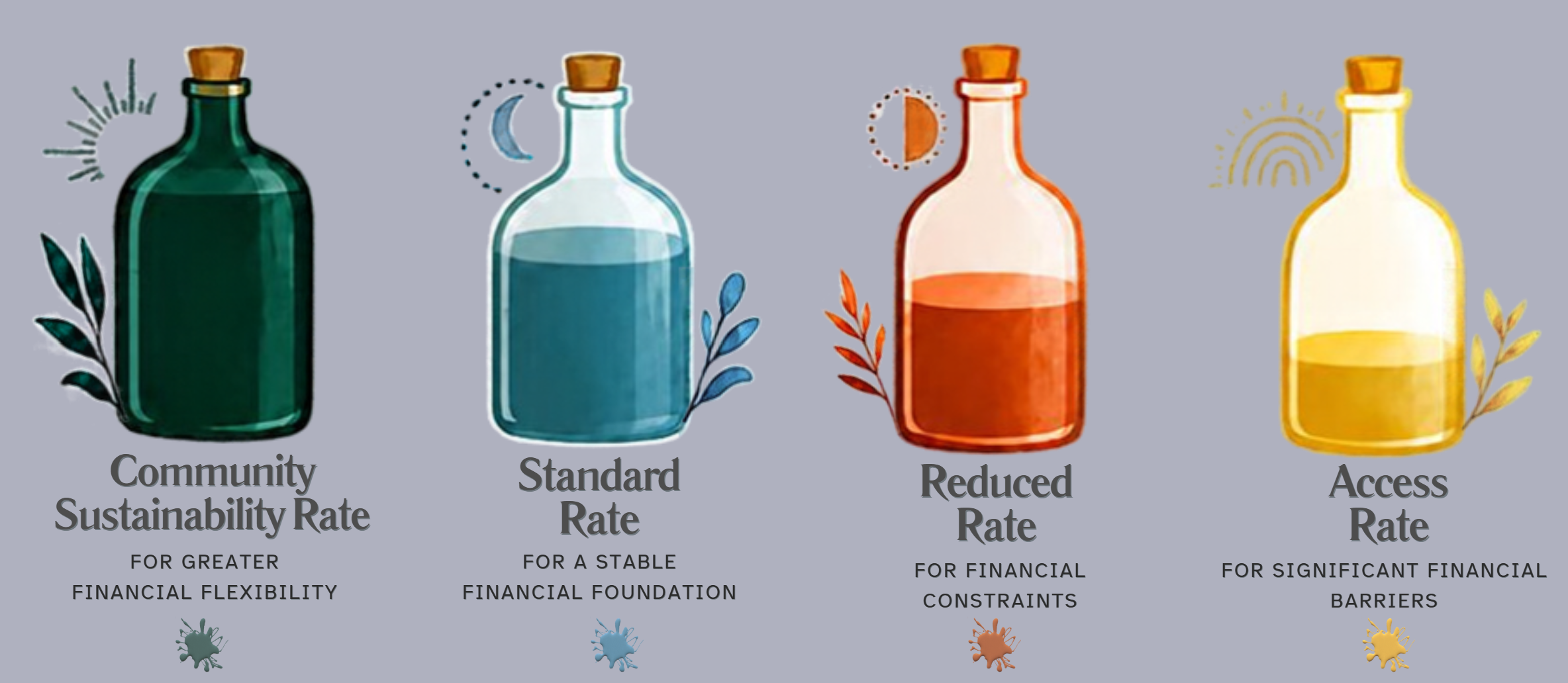




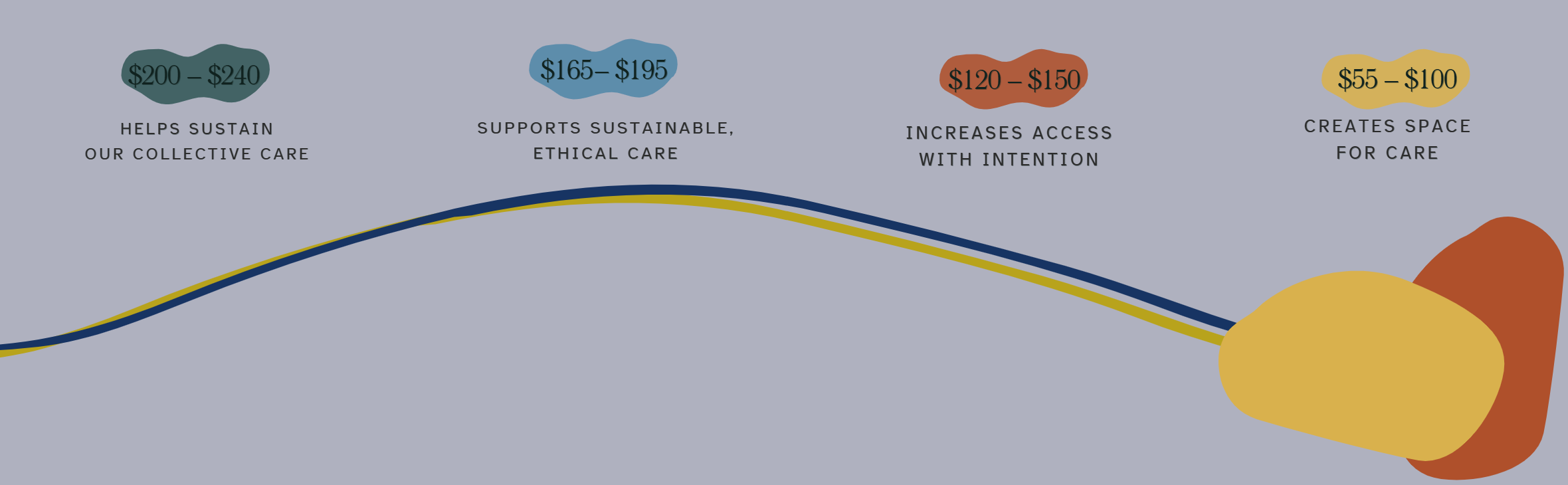
*Basic Needs include food, housing, health care, and transportation.
**Expendable Income might mean you are able to buy coffee or tea at a shop, go to the movies or a concert, buy new clothes, books, and similar items each month, etc.

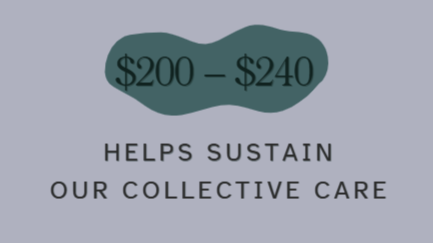
I can comfortably afford to meet my basic needs*.I have savings, investments, or property that provide financial security.I can afford vacations and recreational activities.I can make larger purchases without financial strain.I have reliable access to healthcare and time off.

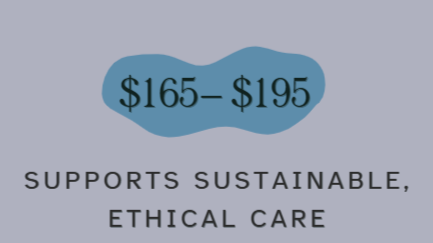
I consistently meet my basic needs.I may have debt, but can manage regular payments.I have some savings or can save regularly.I can afford occasional travel and have expendable income**.I have reliable housing and healthcare.

I meet my basic needs but often worry about expenses.I have debt that limits my financial flexibility.I have little savings or struggle to save regularly.I sometimes delay healthcare or necessary purchases due to cost.Taking time off or traveling requires significant planning or saving.
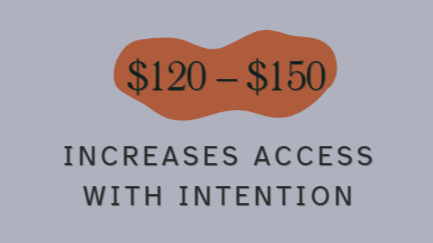

I struggle to meet my basic needs.I may rely on public assistance or financial support from others.I have little or no savings and no expendable income.I sometimes delay or go without necessary healthcare.I have unstable income, employment, or housing.
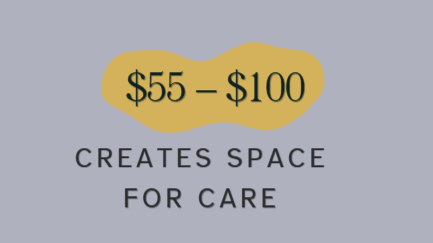
Our equitable private-pay model is based on reciprocity, not sameness.
These descriptions are guides, not rigid categories. We recognize that financial situations are complex. If you’re unsure where you fall, we’re happy to talk with you.
Different Bottles. Same Care.
A Stronger Community.
Financial resources and circumstances are not equally distributed. Our four-bottle model invites clients to choose a rate that reflects their financial reality.
How It Works
Choose your bottle: Identify the rate range that best reflects your circumstances.
Request your rate: Share the session fee you can sustainably afford.
Limited availability: Reduced and Access appointments depend on clinician availability and practice capacity. Requests are not guaranteed.
Confirm your rate: We agree on a fee before care begins.
Ongoing consideration: If your requested rate is unavailable, you may remain under consideration. We review availability every 12 weeks and as openings arise.
Changing circumstances: Rates are generally reviewed annually, with earlier reviews available upon request.
Why We Limit Lower-Rate Appointments
We believe true accessibility must consider both those seeking care and those providing it—including financial realities, fair compensation, and practice sustainability, without unnecessary third-party influence.
While our higher session fees are at or below market value, they help us make reduced-rate care possible through shared responsibility and reciprocity.
The quality of care never changes with the bottle. Only the fee does.
Our commitment is to create meaningful access while sustaining the people and practice that make it possible.

Experience freedom and liberation in your therapeutic journey!
Why We Chose to Move
Away From Insurance
Movement for the Mind began as an in-network insurance practice because we believed it could make therapy more accessible. After years within that system, we began questioning whether it aligned with our approach to care and our values.
Here's what influenced our decision:
Unpredictable payments: Delayed payments, denials, and clawbacks create financial instability for clients, clinicians, and independent practices.
Barriers to continuity: Changes in coverage, eligibility, and insurance networks can disrupt care and create unexpected costs.
Questioning medical necessity: We question a system that requires people to continually justify their need for care through diagnoses and medical necessity requirements. Not every meaningful human experience fits neatly into these definitions.
Privacy and personal information: Insurance may require sharing diagnoses and sensitive clinical information. In today's social and political climate, we are increasingly concerned about who can access that information and how it may be used.
Increasing automation: The use of algorithms and AI in insurance decisions raises concerns about transparency, human oversight, and clients' care.
Time and resources: Insurance administration takes valuable resources away from the people and relationships at the heart of our work.
What It Really Comes Down To
Much of our work involves supporting people as they recognize and navigate harmful dynamics—within relationships, families, communities, and larger societal systems.
We believe that same awareness and accountability must extend to our own practice. We cannot encourage people to question systems that undermine their autonomy while remaining unwilling to question the systems shaping our own work.
Moving away from insurance is one way we're choosing to align our business practices with the values we bring into the therapeutic relationship.

Are you ready to move your mind to heal?